


RNA Sprays for Smarter Plant Protection
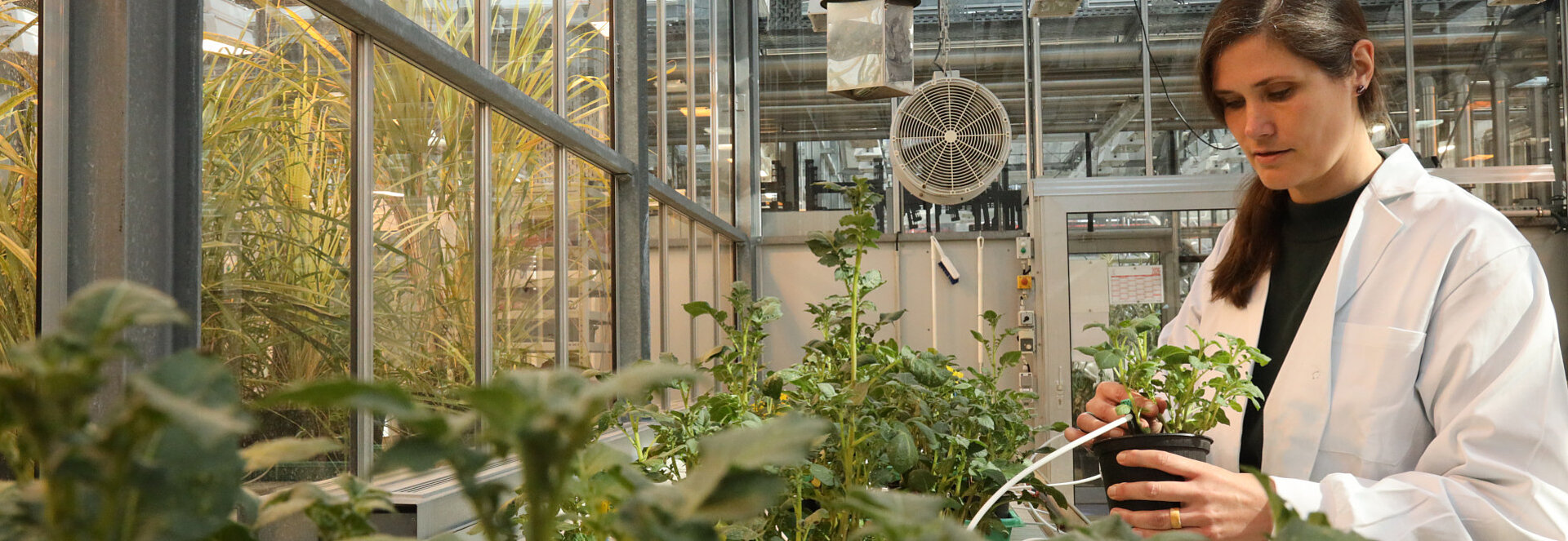
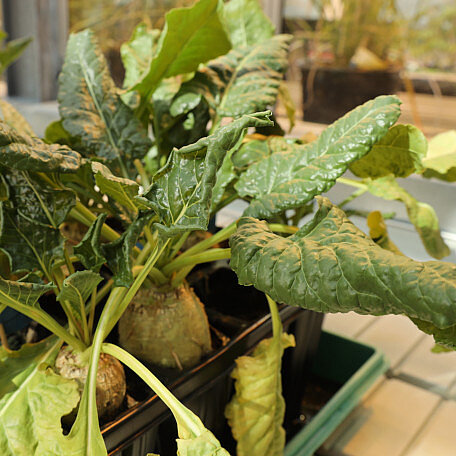
Early in the morning, Prof. Aline Koch enters the greenhouse in the new biology building at the University of Regensburg. This is where she plans the next applications of RNA technology for different varieties of sugar beet. The effectiveness and stability of RNA active ingredient sprays are tested here under controlled conditions before the most promising candidates undergo further trials under field conditions.
A Pioneer in RNA‑Based Crop Protection
RNA-based plant protection strategies are becoming increasingly important internationally. Aline Koch is one of the first researchers in the world to use RNA molecules specifically to repel pests. Her work, published about ten years ago, marked the start of a new field of research, for which she was recently awarded the Julius Kühn Prize by the German Phytomedical Society to honor her achievements.

Global Agricultural Challenges
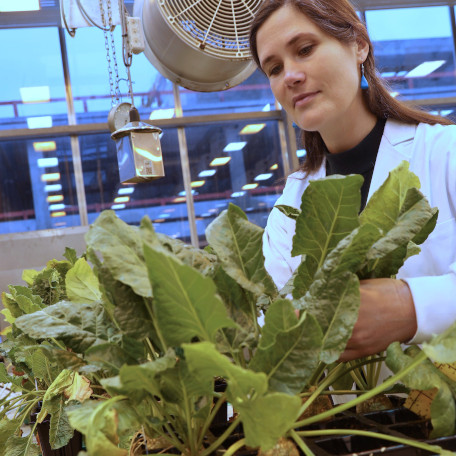
Agriculture is under enormous pressure worldwide: many synthetic chemical pesticides are losing their approval, while at the same time, known and emerging pathogens pose an enormous threat to crops. RNA-based pesticides offer an innovative solution. In the future, plants could be protected in a targeted manner without using chemical pesticides or genetic modification.
From Laboratory Innovation to Practical Application
Together with her team, the biologist is now working on bringing this pioneering technology from the laboratory into practice. This creates an opportunity for young researchers to get involved at the interface between molecular biology and sustainable agriculture.
The goal: to design and formulate double-stranded RNA (dsRNA) in such a way that it effectively inhibits specific target genes in pests. This does not only involve molecular design, but also issues relating to stability, application, and the transferability to agricultural systems.




Koch's team is very international. About half her employees come from abroad. "The international composition of the team brings together different scientific backgrounds and research experiences, which leads to creative solutions and enriches the research process," says Koch.
What do her team members appreciate about working with her? “I think, it’s the work at the interface between basic and applied research that makes our projects so exciting.”
How dsRNA Works Inside Pest Cells
Double-stranded RNA (dsRNA) occurs in viral infections, among other things, and serves as a signal for cells. However, it can also be produced in the laboratory, in a process similar to the one used in mRNA vaccines.
When this dsRNA enters the cells of a pest, such as the Colorado potato beetle, it is mistakenly interpreted as viral material. The cell then initiates a natural defense mechanism designed to render the supposedly viral RNA harmless.
Special enzymes cut the dsRNA into small fragments and then use these fragments as templates to break down all the RNA structures inside the cell that correspond to the fragments. Here’s the trick: if the RNA is designed to resemble the gene sequence of a pest, then that pest is also destroyed.

When activating the video you allow data to be transmitted to Vimeo. To change your preferences go to our data protection statement.
A Tool for Crop Protection
This natural process, which is anchored in the cell, is called RNA interference (RNAi) and makes it possible to switch off specific individual genes. This principle can be used for plant protection: if the sequence of a gene vital to the pest is known, suitable dsRNA can be produced and applied to the leaves of the plants to be protected.
If the pest eats this dsRNA, the corresponding target gene in its body is deactivated, ultimately leading to its death. The huge advantage to this method is that other organisms are not harmed. For this strategy to work, however, the RNA must be stable enough to remain on the plant surface and withstand the insect's digestive process.
From Genetically Modified Plants to RNA Sprays
Originally, Koch used genetic engineering to produce plants that produced the desired RNA molecules themselves, but this proved both, costly and socially controversial. The decisive innovation was therefore to have the RNA no longer produced by the plant, but simply sprayed onto the leaves.
Koch says: "Our partner siTOOLs Biotech GmbH—a spin-off from the University of Regensburg—supplies us with RNA active ingredients of the necessary high quality and quantity that we need."
Precision as the Key to Success
"The advantage lies in the high degree of accuracy," Koch emphasizes. For this form of pest control to work, two factors must be right: the RNA sequence must match the pest's target gene exactly, and the formulation must be such that the RNA can withstand a wide range of environmental conditions and adhere to the plant surface long enough for pests to absorb it.
This approach is particularly effective against leaf-eating insects such as the Colorado potato beetle. In 2023, the US approved an RNAi biopesticide against this pest for the first time—a milestone for the entire field of research.
However, combatting bacteria, viruses, and fungi is more complex. The RNA must be stable and reach its target site within the plant. In Regensburg, the team is working on precisely these challenges.
DNA and RNA—Carriers of Genetic Information
All living organisms store their genetic information in deoxyribonucleic acid (DNA). To use this information, cells produce ribonucleic acid (RNA) molecules that help to translate genetic information into proteins. One important type of RNA molecules is messenger RNA (mRNA) which acts as a working copy of DNA. It transports genetic information from the DNA to the ribosomes, the protein factories of the cell. There, the information encoded in the mRNA is read step-by-step, allowing the cell to assemble proteins from many small molecular building blocks. While humans, animals and plants store their information in DNA, many viruses use RNA as their genetic material often in form of double-stranded form (dsRNA).
Regulatory Challenges and Scientific Guidance
In Germany, RNA-based active ingredients must undergo the same approval process as chemical pesticides. This process is expensive, often takes many years, and is not specifically designed for RNA molecules. The team is therefore advising the competent authorities on how to adapt the current evaluation procedures scientifically and without compromising safety.
Looking Ahead: The Potential of mRNA
Koch is already thinking ahead. She sees enormous potential in the use of another type of RNA—messenger RNA (mRNA).
mRNA is unstable and degrades after a short time without altering the genome. mRNA sprays could help make plants resistant to pests. In addition, mRNA also opens up new approaches to plant breeding, enabling scientists to accelerate certain specific breeding processes and thus reducing costs. While RNAi temporarily "downregulates" individual genes, mRNA sprays could provide a plant with instructions to build a helpful protein for a limited time. The effect is temporary: The mRNA applied is not incorporated into the genome, so there is no permanent change.
Training the Next Generation of Researchers
"In Regensburg, young researchers can help develop RNA technologies from target gene identification to experimental validation," says Koch. "The challenges in plant protection affect agricultural systems worldwide. Our research addresses precisely these global challenges. This makes Regensburg particularly appealing to international students and doctoral candidates."
Interested in research opportunities related to RNA spray-based technologies and phytomedicine? Visit Professor Koch's website PlantRNA to learn more about her research!
