



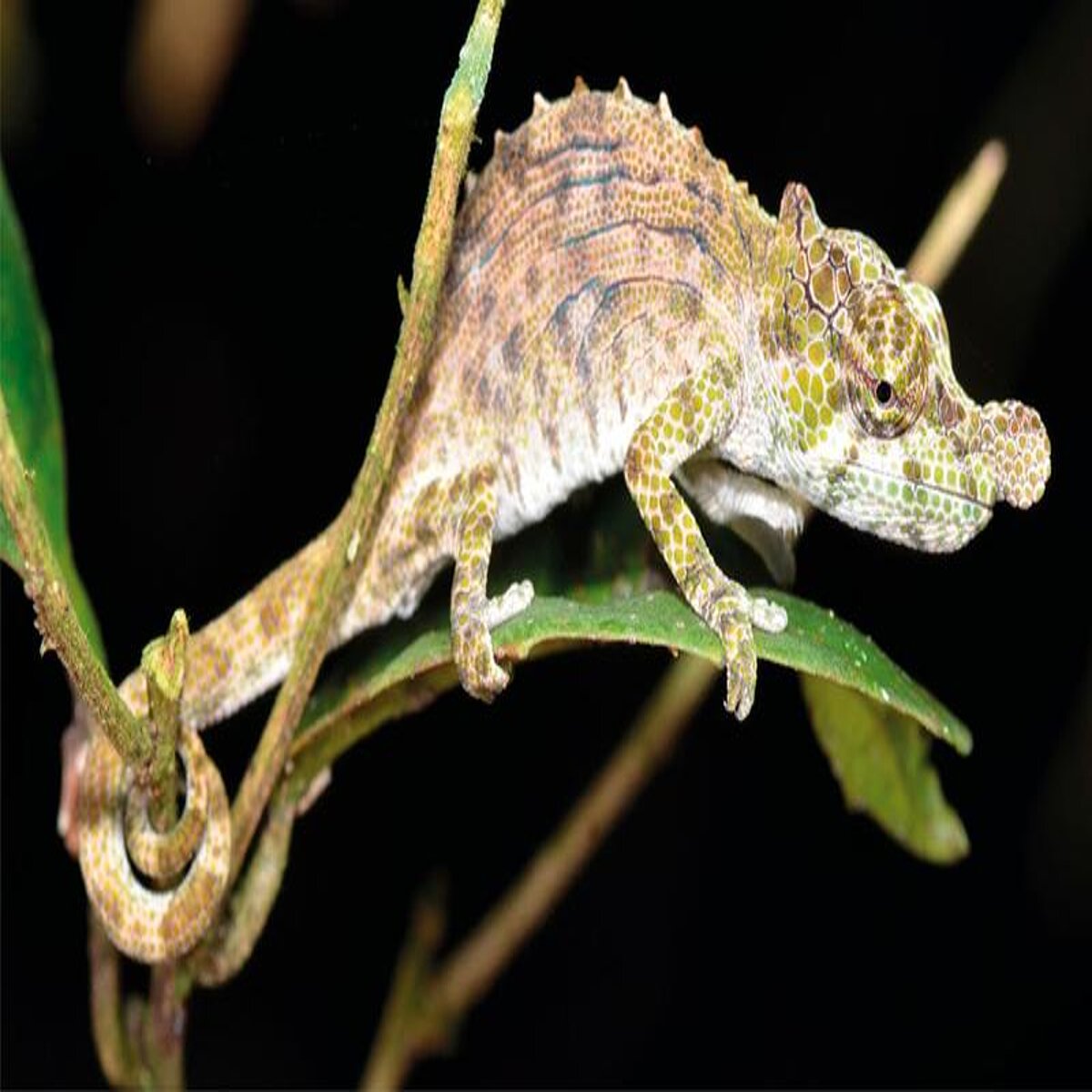
The new species Calumma hofreiteri has been confused with C. nasutum. It is named in honour of the geneticist Prof. Dr. Michael Hofreiter who made the museomics study possible. David Prötzel, David Prötzel
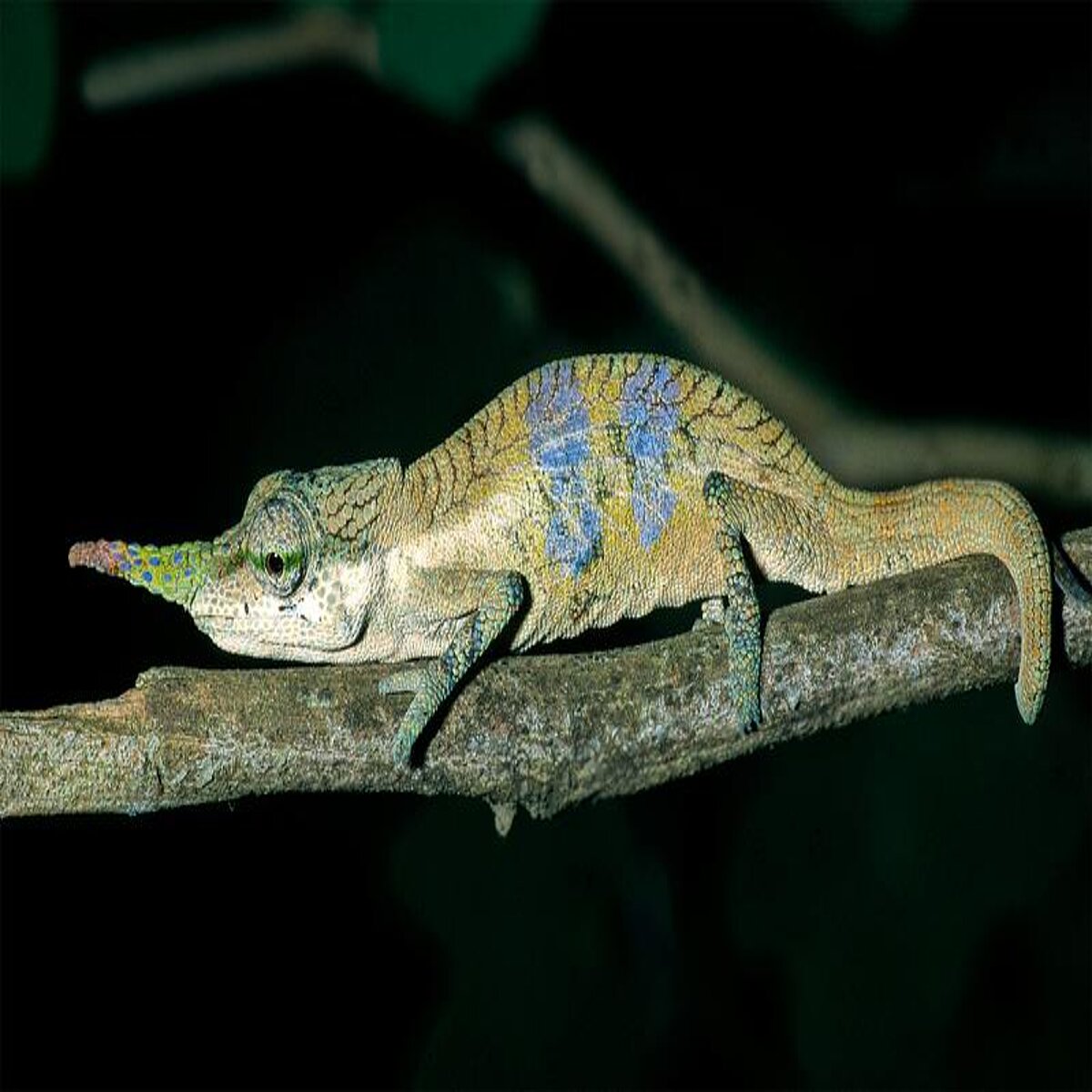
Males of the new chameleon species Calumma pinocchio have a smooth-edged nasal appendage Frank Glaw, SNSB
Madagascar is the land of chameleons. More than 40% of all known chameleon species live on the island off the East African coast, including the so called Pinocchio chameleon, which has been known for almost 150 years. It belongs to the Calumma gallus species complex, whose males have long nasal appendages. So far, the shape of the elongated snout has been the main feature used to identify members of the species.
Genetic and morphological analyses now prove that the animal known as the Pinocchio chameleon actually belongs to a completely new species. The authors of the new study named it Calumma pinocchio, so that its common name and its scientific name now match.
The researchers were able to uncover further new relationships among the nose chameleons by examining the genes of historically collected specimens. They identified a second new species, Calumma hofreiteri, which had previously been classified as Calumma nasutum based on the shape of its nasal appendage and other characteristics.
“The genetic analyses are conclusive: the nose chameleons have virtually fooled previous research,” says first author Dr. Frank Glaw from the Bavarian State Collections of Natural History (SNSB). “Our study also revealed that the nasal appendages can change quickly in terms of length, shape, and color. Their evolution is possibly driven by the respective preferences of females in mate selection.”
To reclassify the nose chameleons, the international research team also used the so-called museomics approach, which enables to obtain DNA sequences from ancient museum specimens. The oldest specimen examined in this study was a chameleon collected in 1836. “The study shows the great potential of the new museomics methods to correctly identify historically collected specimens especially in species complexes,” adds Prof. Miguel Vences from the Technical University of Braunschweig.
Including the two new descriptions, exactly 100 chameleon species are now known from Madagascar, and a total of 236 species worldwide.
Contact for scientific information:
Dr. Frank Glaw
SNSB – Zoologische Staatssammlung München
Münchhausenstraße 21, 81247 München
E-Mail: glaw(at)snsb.de
Phone: 0049 89 8107 114
Original publication:
Glaw, F., S. Agne, D. Prötzel, P.-S. Gehring, J. Köhler, M. Preick, F. M. Ratsoavina, N. Straube, K. Wollenberg-Valero, A. Crottini & M. Vences (2025): Towards a revision of the Malagasy chameleons of the Calumma gallus complex: Redefinition of Calumma nasutum based on a museomics approach, and descriptions of two new species. – Salamandra 61 (4): 442-466.
